January 15, 2026
SAM.govWhy Your SAM Profile is Missing Critical NAICS Codes
Most contractors update SAM.gov only at renewal. That gap quietly blocks visibility in buyer searches and can cost qualified firms their next award.

Have Any Questions?
(813) 355-9295
Many firms treat the SBA Small Business Search profile as a one-time setup task. In practice, it is a live marketing and qualification asset used during set-aside market research. If that profile is thin, stale, or inconsistent with your other data, your firm is harder to justify in early acquisition decisions.
For teams new to this: the SBA profile is often referenced when buyers need to identify capable small businesses quickly. It is not a replacement for SAM.gov; it complements it by surfacing richer capability context.
During set-aside planning, contracting teams need defensible evidence that qualified small businesses are available. Rich, current profile data helps them document that evidence.
An optimized profile improves:
When neglected, the opposite happens: weak discoverability, unclear relevance, and fewer inbound opportunities.
Many profiles provide generic one-liners that do not explain mission outcomes, contract complexity, or delivery scope.
Directly reusing SAM text can create awkward truncation and low-information sections. Each platform has different practical constraints.
Expired or missing updates make buyers question process maturity.
Teams often use internal language that does not match requirement language used by agencies.
Write capability text around outcomes the government cares about:
Avoid broad claims without proof.
Pull language from recent solicitations and statements of work in your target NAICS areas. Use that language naturally in your narrative and keyword fields.
Cross-check core data against your records in SAM.gov and program guidance from SBA federal contracting resources.
At minimum, keep these synchronized:
Do not wait for annual SAM renewal. Run a quarterly profile review that includes:
You need a profile that works for two audiences:
A good rule is to pair technical terms with short context. Example: "RMF (Risk Management Framework) package support for authorization lifecycle activities."
If two or more answers are no, prioritize cleanup before your next outreach cycle.
Schedule your consultation below and we will align your profile language, proof points, and search visibility with current federal buying behavior.
Pick a time that works for you and book directly on our calendar.
Most contractors update SAM.gov only at renewal. That gap quietly blocks visibility in buyer searches and can cost qualified firms their next award.
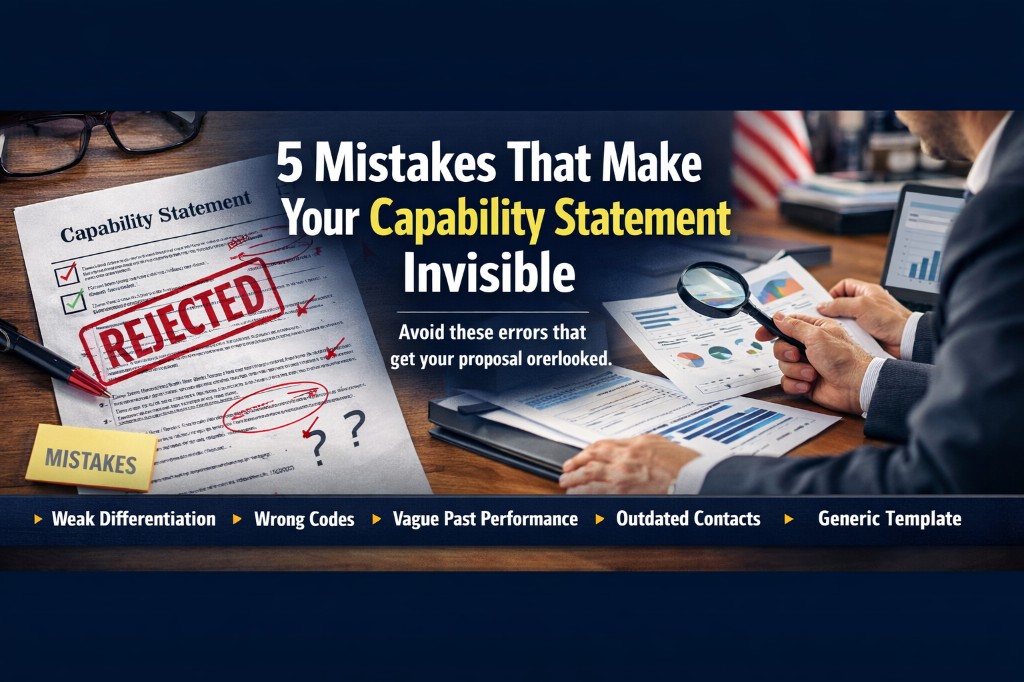
Capability statements fail less from design and more from weak positioning. These five common mistakes tell buyers you are not ready, even when your team is qualified.
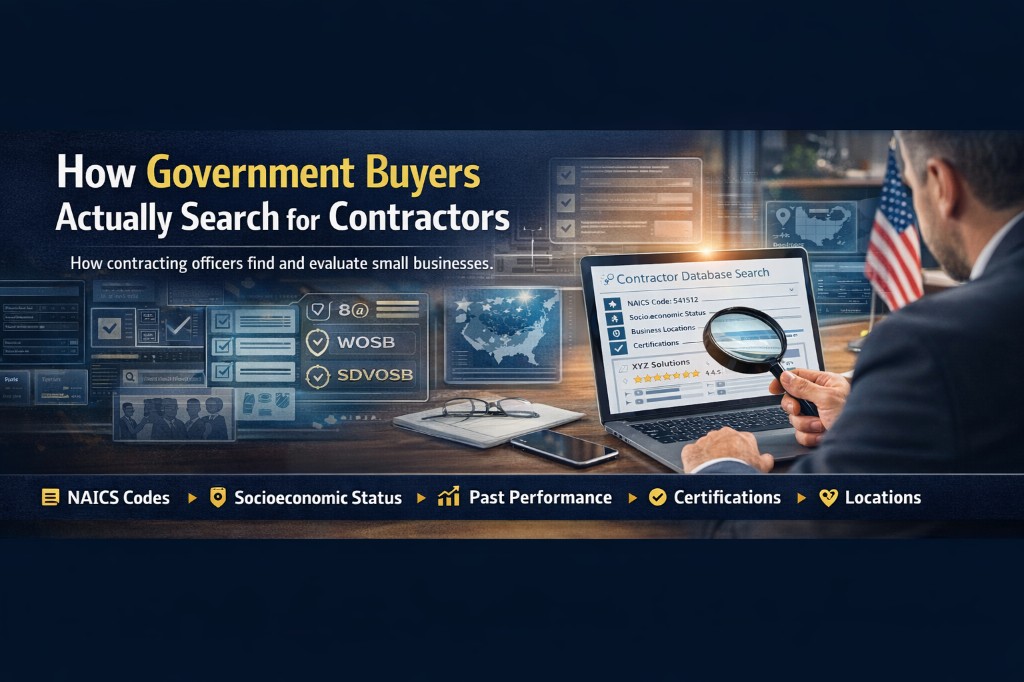
If you want more federal opportunities, optimize for how buyers run market research. This breakdown shows where visibility is won or lost before solicitations are released.